
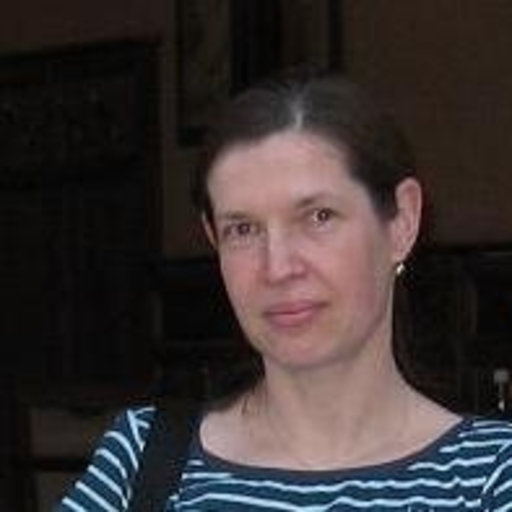
Jana Trgalova is Associate Professor in mathematics education at the Haute École Pédagogique du Canton de Vaud (HEP Vaud) in Lausanne, Switzerland. Her research focuses on the integration of digital technologies in mathematics teaching and learning, with particular interest in the design, evaluation, and use of digital resources by teachers and students. She investigates how digital tools can support mathematical reasoning, visualization, and modeling, as well as the development of teachers’ competencies for designing and implementing technology‐enhanced learning environments. Jana Trgalova has contributed extensively to international projects and publications on the didactics of mathematics and digital education, bridging research, teacher education, and classroom practice.
Talk title: Evaluating and Designing Digital Curricular Resources: Bridging Research and Teacher Education
Abstract:
The growing accessibility of digital curricular resources has profoundly transformed mathematics teachers’ professional practices. Teaching is increasingly recognized as a design activity, where teachers actively select, adapt, and create resources to support students’ learning. This shift raises crucial questions about how teachers evaluate the quality and appropriateness of these resources, and how teacher education can foster such evaluative and design capacities.
This plenary talk addresses the dual challenge of evaluating digital curricular resources and developing teachers’ digital resource design capacity (DRDC). From a research perspective, I will discuss existing frameworks for evaluating resource quality, including criteria such as accuracy, relevance, coherence, interactivity, and adaptivity, and consider how these frameworks can inform both scholarly inquiry and classroom practice. From a teacher education perspective, I will illustrate how the notion of DRDC provides a useful lens to conceptualize and support pre-service teachers’ learning as designers. Drawing on examples from a Master’s program in mathematics education, I will show how structured design activities, peer evaluation, and guided reflection help student-teachers to engage critically and creatively with digital technologies across the phases of design for teaching, design-in-use, and redesign.
Finally, I will reflect on the implications of these findings for preparing teachers to engage with emerging digital and AI-based tools thoughtfully, critically, and confidently. Developing teachers’ ability to evaluate and design digital resources is key to ensuring that technology use in mathematics education remains pedagogically grounded and responsive to learners’ needs.
.
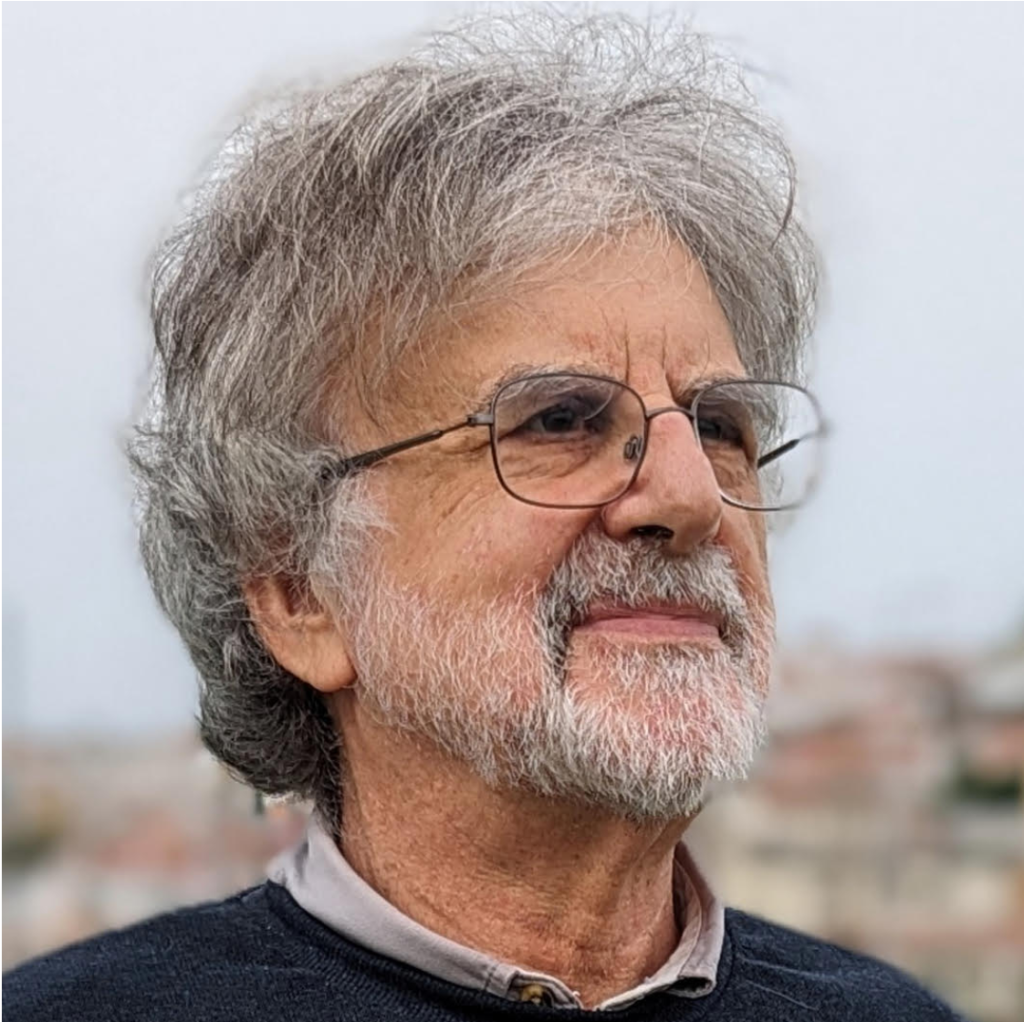
António Dias de Figueiredo is professor emeritus at the Department of Computer Engineering at the University of Coimbra and researcher at the Centre for Informatics and Systems at the University of Coimbra (CISUC), where his research focuses on the social and pedagogical dimensions of technologies, the history and philosophy of technologies, and new generation scientific research methods. He was vicepresident for Western Europe of UNESCO’s Intergovernmental Informatics Programme, Paris, and a member of the Panel of the Special Programme on Advanced Educational Technology of the Scientific Committee of NATO, Brussels. He has participated in several European projects as a partner and scientific consultant and has acted on several occasions as a consultant to the European Commission on issues of technologies in education. He was awarded an Honoris Causa by the Open University and the Sigillum Magnum by the University of Bologna. He has published over 300 scientific articles.
Talk title: Learning Mathematics in Higher Education in the Era of Artificial Intelligence
Abstract:
This presentation explores the transformative impact of artificial intelligence (AI) on the teaching, learning, and practice of mathematics at the university level, examining AI as a dynamic, personalized, and valuable learning partner. The discussion covers the human-AI partnership, the role of AI as an intelligent tutor and research assistant, the challenges of curriculum transformation, and the necessity of AI literacy for mathematicians. The participants will realize that AI is not a substitute for mathematical understanding but a powerful force for the augmentation of mathematical cognition. The presentation provides strategies for the use of AI as a tool to enhance conceptual depth, to foster critical thinking, and to develop a much neglected skill that is critical for the AI era: the ability to formulate the right questions
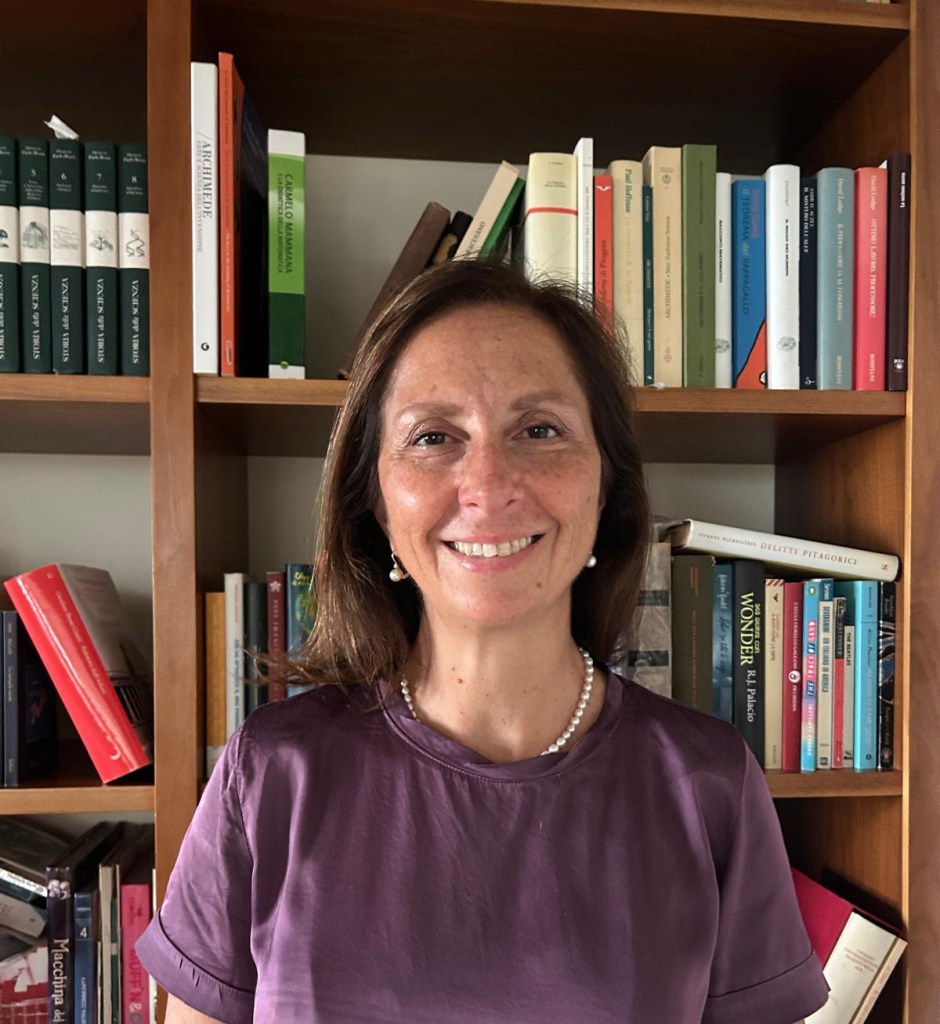
Maria Flavia Mammana is Associate Professor of Mathematics Education and History of Mathematics at the University of Catania (Italy). She has been visiting student at Auburn University (AL) during her PhD and she was a postdoc at Konstanz University. Her main research interests includes Euclidean geometry, teaching/learning mathematics with technologies, Mathem-Ethics, STEAM. She is responsible for the Math Competitions called Etniade, she is president of the Association GIMat (that organizes yearly a conference for mathematics teachers), and since October 2021 she is member of the Italian Commission of Mathematical Instruction..
Talk title: Mathematics, Technology, Mathem-Ethics: opportunities and challenges
Abstract:
For many students, mathematics is a challenging and difficult subject. Its applications are often linked only to practical issues and modeling, but it can be also used to reflect upon ethical issues (mathem-etihcs). Today, the use of technology on the one hand and considerations of Mathem-Ethics on the other can open up new scenarios with regard to issues of teaching/learning the subject and attitude towards the subject itself. Suggestions in this direction will be offered during the conference.
Zoltán Kovács is an assistant professor at the Private University of Education, Diocese Linz, and a member of the Linz School of
Education at Johannes Kepler University (JKU), Austria. He is also a volunteer developer of GeoGebra and a fellow of the RISC
Institute, JKU. His research focuses on mathematics education, dynamic geometry, automated reasoning, and educational software development.
Kovács has made significant contributions to open-source and academic projects, maintaining repositories on GitHub and other
open-source resources. Since 2024, he has chaired the Automated Deduction in Geometry (ADG) Foundation and served as guest editor for the Annals of Mathematics and Artificial Intelligence special issue on “Formalization of Geometry and Reasoning.” He has organized and chaired international conferences, including the 2021 ADG conference, and actively collaborates in the fields of computer algebra and theorem proving. His work has earned multiple awards, notably the Distinguished Software Demonstration Award at ISSAC 2024 for the ShowProof command in GeoGebra Discovery and the Distinguished Software Presentation Award at ISSAC 2016.
Talk title: I know what I eat: Open-source based automated reasoning as the transparent way of artificial intelligence
Abstract:
With the advance of AI, we are experiencing firsthand the sensational opportunities that are opening up. Computers help us solve mathematical problems. We have already reached the point where they could even win the Olympiad. While we rejoice, applaud, and congratulate them, our students simply copy the AI’s solutions without understanding what is happening in the background. This is not something to be so clearly happy about.
Without attacking this trend (since I myself use it every day to help with many different tasks), I am trying to get involved in a research direction where I can actively research and control what is happening.
One of the goals of automatic proof is indeed to get the final result. But the other goal is to make the proof readable, so that many people can achieve the security and joy of understanding. Of course, AI applications also set this didactic goal and often achieve it. However, the path leading to this goal is clear to very few: How does AI get from understanding the task to communicating the solution? In my presentation, I will not examine this, but will discuss methods where this path is very clear. Following in the footsteps of the greats of the Chinese school of geometry (Wu, Chou, Gao, Zhang) and following the line of Spanish algebraic geometry (continuing the methods of Recio and Vélez), we arrive at the results of the young scholars of the modern Chinese Olympiad school (Peng and colleagues), which are mathematically excellent to elaborate and require relatively little theoretical knowledge.
I explain all this using open-source techniques, in a transparent and traceable manner, with the help of software such as Java Geometry Expert and GeoGebra Discovery.